
Article: Vitamin levels in children: signs to look out for and what helps

Vitamin levels in children: signs to look out for and what helps
The silent crisis many parents feel – and what can be done about it
Childhood then – and now
Childhood used to mean movement. Playing outdoors, running around, riding bikes, playing football in the courtyard, feeling the sun on your face. Today, things often look different: sitting for hours – at school and then in front of a screen. TikTok, Youtube, gaming. Exercise and sunlight have become the exception.
Diet has also changed dramatically:
- A quick piece of toast or some cereal in the morning.
- Pasta with sauce for lunch, bread and cold cuts for dinner.
- Vegetables are often left uneaten, and fish is rejected.
- Instead, there are sweet snacks, processed foods, and sugary drinks.
The reality is: Children between the ages of 4 and 11 rarely eat as balanced a diet as would be desirable. And even parents with the best intentions reach their limits in everyday life.
The invisible burden in children's everyday lives

Then there is the pressure: school, homework, comparisons with others, and sometimes bullying. Many children are stressed, irritable, and emotionally tense.
The increasing use of media intensifies the situation: less sleep, overstimulated nerves, and hardly any moments of genuine calm. Teachers and doctors report more and more concentration problems, nervousness, and irritability – along with a significant increase in ADHD diagnoses.
And all of this at an age when children should actually be carefree.
When building blocks are missing …

Scientifically speaking, a child between the ages of 4 and 11 is like a house under construction: everything grows, develops, and connects. If key building blocks are missing, the entire foundation becomes unstable.
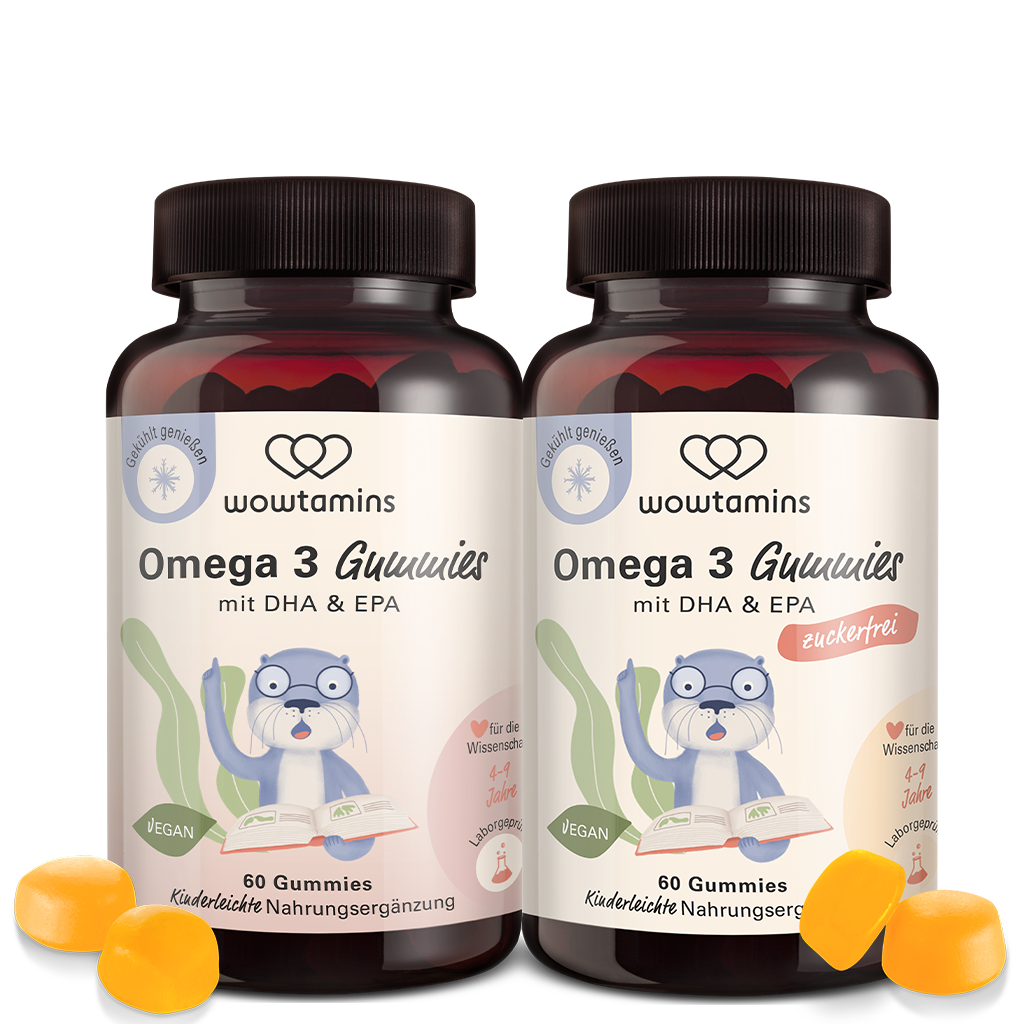
- Omega-3 fatty acids (DHA & EPA) support normal brain function* – but fish is unpopular.
- Vitamin D needs sunlight – yet many children hardly spend any time outdoors anymore.
- B vitamins & zinc support the nerves and stress resilience – when they are lacking, irritability increases.
- Magnesium calms muscles and nerves – a deficiency often manifests as inner restlessness or sleep problems.
Many behavioral issues are not “character flaws” but silent nutrient deficiencies. And while in the short term “only” irritability or fatigue may be noticeable, studies suggest these may appear before possible long-term consequences—from chronic illnesses to emotional problems.
➡ View Kids Complete sugar-free now
Parents torn between two sides
Most mothers and fathers know: “I should really make sure my child gets more vitamins and minerals.”
But putting it into practice often fails in everyday life:
- Vegetables are refused.
- Fish doesn’t make it onto the plate.
- Tablets are spat out.
- Powder remains untouched.
So the desire for a solution remains—but reality feels like a dead end.
What experts are increasingly recommending
Many nutrition specialists now agree: child-friendly ways are needed to safely cover the most important building blocks. Solutions that:
- work practically in everyday life,
- contain no sugar or additives,
- and are willingly accepted by children.
And this is exactly where approaches have now emerged that have become part of everyday life in many families—completely without pressure or arguments.
A solution children genuinely accept
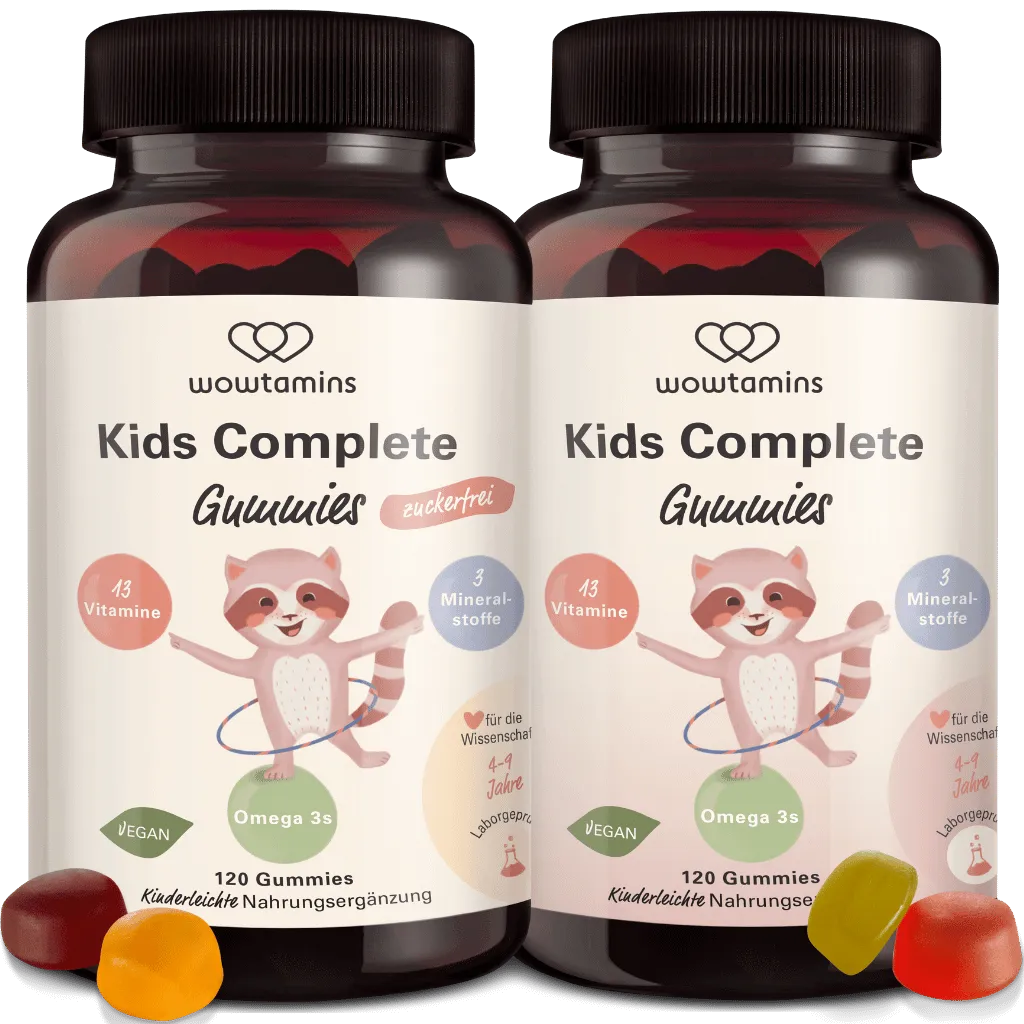
One option already used by many families is Kids Complete sugar-free by wowtamins.
These aren’t tablets or powders—but small, fruity gummies that children enjoy eating.
The clever part:
- Complete nutrient profile with 13 vitamins, minerals, and omega-3 from algae.
- Sugar-free, vegan, with no artificial additives.
- Made in Germany
- Laboratory tested
- Nutrient formulation based on nutrition studies involving children from Germany
A first in Germany.
Parents report that the daily “argument about vitamins” ends—with children seeing the gummies as a little treat, not an obligation.
What can change

Imagine the daily battle over vitamins and nutritional gaps simply disappearing.
- No more arguments at the breakfast table.
- Your child willingly takes something that’s good for them.
- You finally feel that your child is fully supported—with no nagging doubt that “something might still be missing.”
- More calm, greater ease, less stress.
Many parents report that, over time, their children’s mood also changes:
More energy, greater balance, seeming more stable and confident overall in everyday life. Some even notice that homework becomes easier or that sleep quality improves.
Small changes often add up to make a big difference.
Voices from families
“We’ve tried so many things, but my son never willingly took anything. With the gummies, he asks for them himself. For the first time, I feel like we really have our nutrition under control.”
– Stefanie, 35, mother of two boys (6 & 9)
“My daughter was constantly tired and easily irritated. I thought that was just her personality. But for the past few weeks, she’s seemed much more balanced—almost like a different person. For me, that makes a huge difference.”
– Tobias, 42, father of an 8-year-old
“The best part: No more pressure. We used to argue every day when it came to tablets or powder. Now it’s like a ritual—she even looks forward to it.”
– Katharina, 39, mother of a 5-year-old
Regaining a sense of normality

In the end, it’s not just about vitamins. It’s about peace of mind, trust, and the reassurance that your child is getting what they need to grow up strong, healthy, and happy.
You can’t change the world from the ground up—school, media, and stress will remain. But you can get a handle on one area that used to give you a headache.
Kids Complete sugar-free from wowtamins is not “the one solution to everything,” but it is one building block that makes everyday life easier—for you and your child.
➡ View Kids Complete sugar-free now
*Permitted EU health claim: DHA contributes to the maintenance of normal brain function.
Vitamin D contributes to the normal function of the immune system.
Please make sure to eat a varied, balanced diet and maintain a healthy lifestyle.