Skip to content

Biotin - wowtamins Nutrient Guide

Biotin - wowtamins Nutrient Guide
What is the significance of biotin for children and adults?

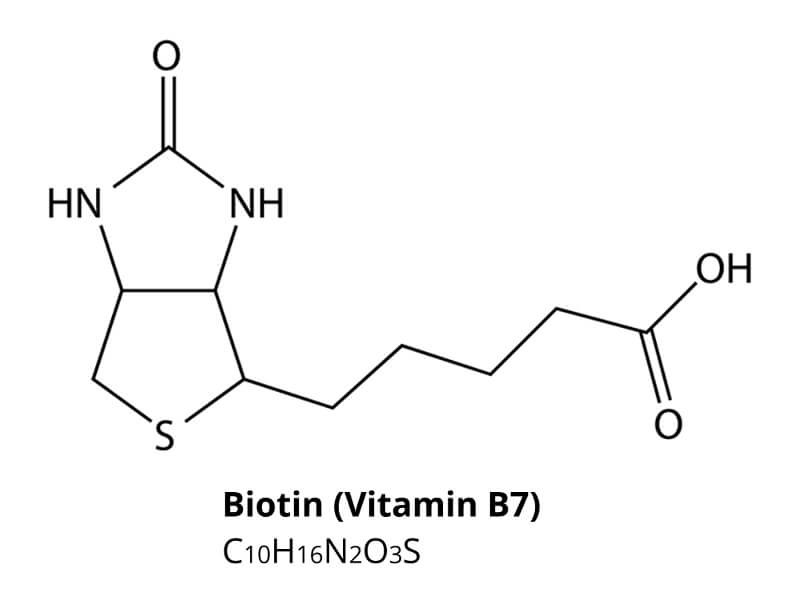
Biotin, also known as vitamin B7, belongs to the family of B vitamins. This water-soluble biomolecule is essential for humans and must be regularly supplied to the body.

Vitamin B7 contributes

  • to normal energy metabolism
  • to normal functioning of the nervous system
  • to normal metabolism of macronutrients
  • to normal psychological function
  • to the maintenance of normal skin, mucous membranes, and hair

How much biotin do children need?

The German Nutrition Society (DGE) estimates the amounts of vitamin B7 that adults and children should consume daily. Exactly how much our body needs is unknown. [1]

Infants

  • 0 to under 4 months: 4 µg
  • 4 to under 12 months: 6 µg

Children

  • 1 to under 4 years: 20 µg
  • 4 to under 7 years: 25 µg
  • 7 to under 10 years: 25 µg
  • 10 to under 13 years: 35 µg
  • 13 to under 15 years: 35 µg

Adolescents and adults

  • 15 to under 19 years: 40 µg

Men: 40 µg

Women: 40 µg

Pregnant women: 40 µg

Breastfeeding women: 45 µg

Estimated values for an adequate intake of biotin, as of 03/2024. [2]

In 2007, researchers from the Robert Koch Institute published data on the nutritional situation of children and adolescents in Germany. The study known as the EsKiMostudy also contains information on biotin status.

The scientists concluded that boys and girls aged 6 to 11 are generally well supplied with vitamin B7. The situation is the same among male adolescents aged 12 to 17. Only among female teenagers do 25 percent of 12- to 17-year-olds fail to meet the DGE recommendations. [3]

Where is biotin found?

We can meet our biotin requirements from two possible sources: food and our gut flora. The bacteria living in the human gut produce this vital nutrient, allowing it to be absorbed through the mucous membrane.

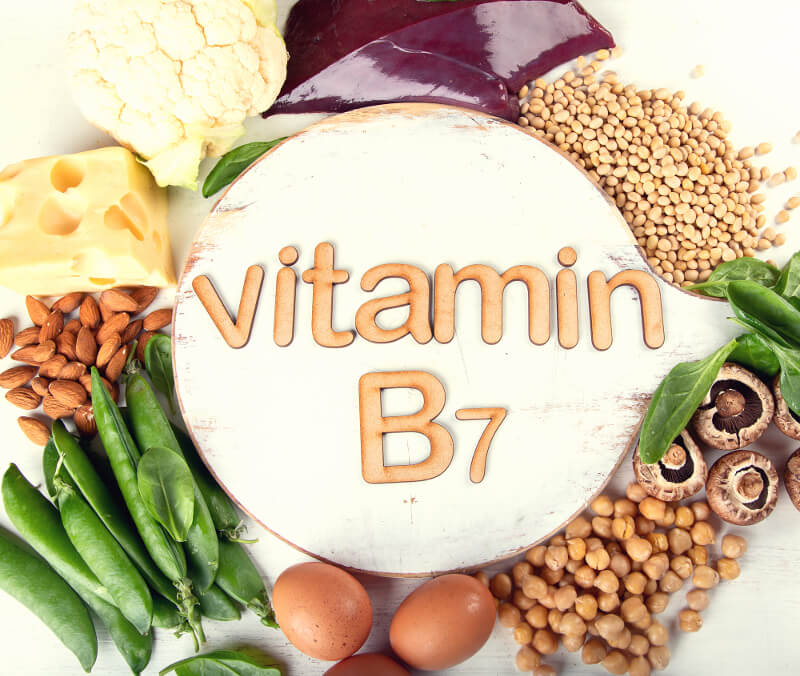
Biochemists have not yet determined exactly how much the gut flora contributes. Vitamin B7 is also found in various plant- and animal-based foods. The best sources include organ meats, dairy products, nuts, and mushrooms.

Meat & fish (per 100 grams)

  • Chicken liver – 216 µg
  • Beef liver – 103 µg
  • Pork kidney – 33 µg
  • Salmon – 30 µg
  • Pork liver – 27 µg
  • Beef kidney – 25 µg

Dairy products & eggs (per 100 grams)

  • Buttermilk powder – 37 µg
  • Whole milk powder – 25 µg
  • Chicken egg – 25 µg

Legumes, grains & nuts (per 100 grams)

  • Wheat bran – 44 µg
  • Hazelnut – 39 µg
  • Peanut – 34 µg
  • Soybeans – 30 µg
  • Rolled oats – 20 µg
  • Walnut – 19 µg

Mushrooms (per 100 grams)

  • Button mushroom – 16 µg
  • Chanterelle – 15 µg
  • Porcini mushroom – 15 µg
  • Shiitake mushroom – 15 µg

Biotin content in selected foods. [4, 5]

With a breakfast egg, children under 7 already consume the recommended daily amount of vitamin B7. Even a small portion (50 grams) of salmon contains enough biotin to supply children under 7 for the entire day.

Biotin is naturally found in our products too, such as the Kids Complete Gummies.

Mandatory notice: Food supplements are not a substitute for a balanced and varied diet and a healthy lifestyle.

List of sources - Biotin - wowtamins Nutrient Guide

Discover our vitamin gummy categories