Skip to content

Omega-3 fatty acids – wowtamins nutrient guide
Omega-3 fatty acids – wowtamins nutrient guide

What is the importance of omega-3 fatty acids for children and adults?

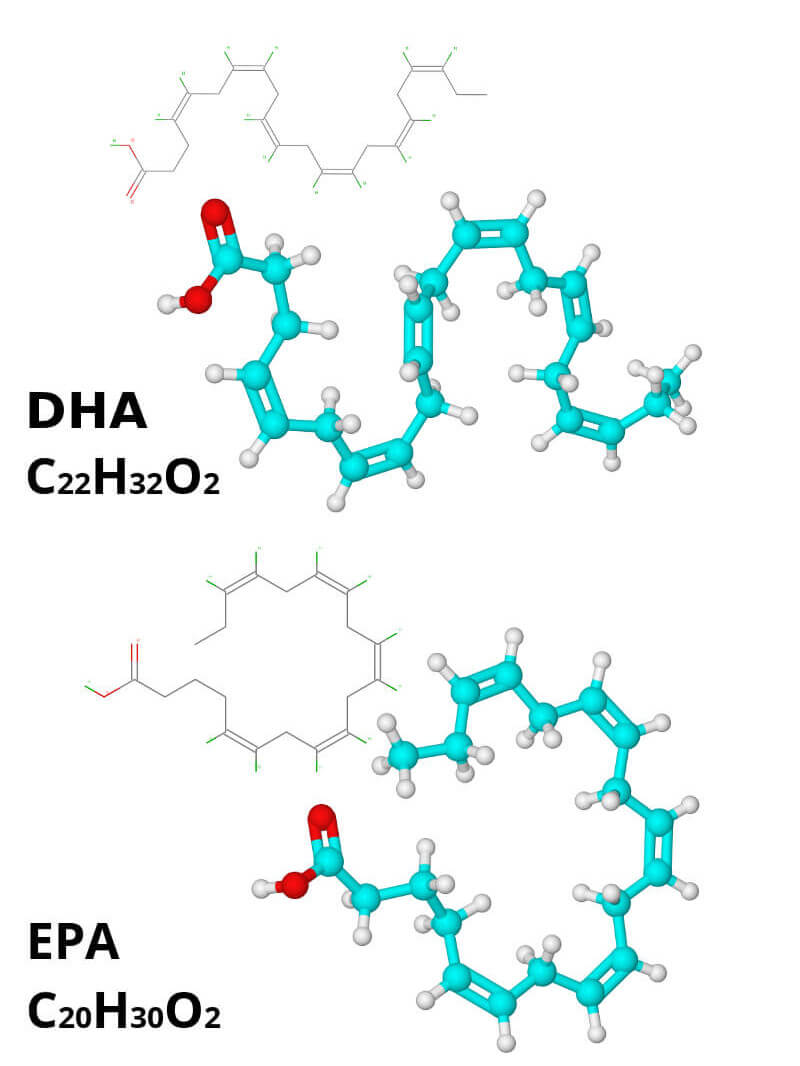
Omega-3 fatty acids are long-chain, polyunsaturated fatty acids and essential components of our diet. This means that our body cannot produce these nutrients itself and therefore relies on obtaining them through food. The most prominent representatives include alpha-linolenic acid (ALA), eicosapentaenoic acid (EPA), and docosahexaenoic acid (DHA).

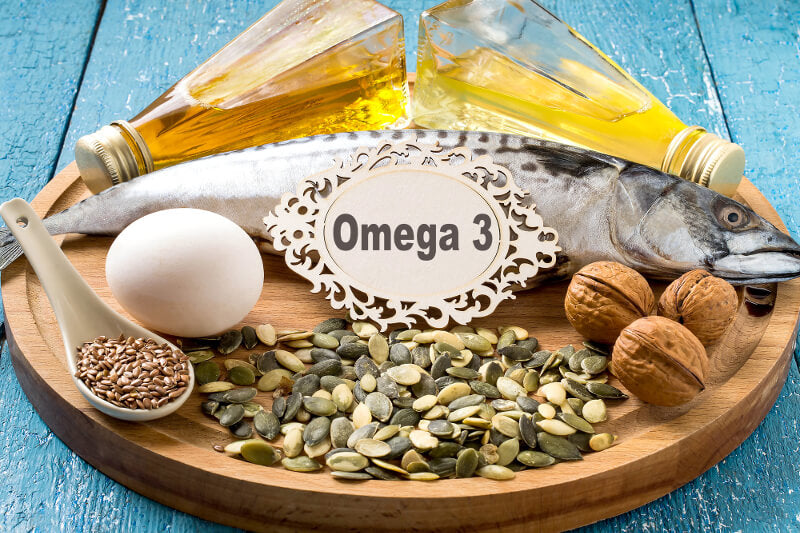
ALA is found in larger quantities in flaxseed oil, walnut oil, hemp oil, and rapeseed oil. DHA and EPA are produced by special microalgae that serve as food for fish and other marine animals. In addition to algae oil, these two fatty acids can therefore be found in oily sea fish such as salmon and herring, or in tiny crustaceans (krill).

However, there are major differences in bioavailability between the various omega-3 fatty acids. Only DHA and EPA are biologically active forms for the human body and can be utilized effectively. In the body, ALA is converted into EPA at a rate of only about 6–21%, and into DHA at a rate of 1–9% [1, 2, 3].

DHA contributes to the maintenance of normal brain function and normal vision*. EPA and DHA contribute to normal heart function*.

How much omega-3 do children need?

There is currently no official nutrient reference value for omega-3 fatty acids. For adults, many health institutes and national recommendations advise a daily amount of at least 250 mg of DHA + EPA [4,5]. However, recent scientific studies suggest higher amounts.

There are still only a few official recommendations for children in different age groups, and they differ considerably. Below is an overview of the official guidelines for the recommended daily minimum amounts.

  • 2–18 years and adults: 250 mg (DHA+EPA)

Recommendation of the European Food Safety Authority [5]

  • 1–3 years: 40 mg (DHA+EPA+DPA)
  • 4–8 years: 55 mg (DHA+EPA+DPA)
  • 9–13 years: 70 mg (DHA+EPA+DPA)
  • 14–18 years (girls): 85 mg (DHA+EPA+DPA)
  • 14–18 years (boys): 125 mg (DHA+EPA+DPA)

Recommendation of the Australian government and New Zealand health authorities [6]

  • 2–4 years: 100–150 mg (DHA+EPA)
  • 4–6 years: 150–200 mg (DHA+EPA)
  • 6–10 years: 200–250 mg (DHA+EPA)

Recommendation of the Food and Agriculture Organization of the United Nations [7]

For daily needs, a portion of fish such as trout weighing between 10 g (approximately 100 mg DHA+EPA) and 25 g (approximately 250 mg DHA+EPA) is sufficient. However, one or two larger fish meals per week are also enough to meet the requirement.

Since fish is generally not among children’s favorite foods, most German children consume less than or at the lower end of the recommended daily minimum amounts, with an average fish consumption of 9 g per day among 6-year-olds, 11 g among 7- to 9-year-olds, and 14 g among 10- to 11-year-olds [8].

Where are omega-3 fatty acids found?

The important omega-3 fatty acids DHA and EPA are found in larger amounts primarily in fatty marine fish, as well as in fish oil or algae oil supplements. The overview below shows the amount contained in a small portion of various foods.

  • 2.5 g algae oil – 1125 mg (DHA+EPA)
  • 50 g sardines – 1042 mg (DHA+EPA)
  • 50 g herring (Baltic Sea) – 955 mg (DHA+EPA)
  • 50 g salmon – 874 mg (DHA+EPA)
  • 50 g mackerel – 664 mg (DHA+EPA)
  • 50 g trout – 512 mg (DHA+EPA)
  • 50 g tuna – 408 mg (DHA+EPA)
  • 50 g cod – 177 mg (DHA+EPA)
  • 50 g haddock – 92 mg (DHA+EPA)

Omega-3 fatty acid content in various foods [9]

A weekly portion of 100 g sardines, herring, or salmon together with a popular side dish is already sufficient to meet a child's need for omega-3 fatty acids. With other, leaner fish such as trout or tuna, the portion should be slightly larger.

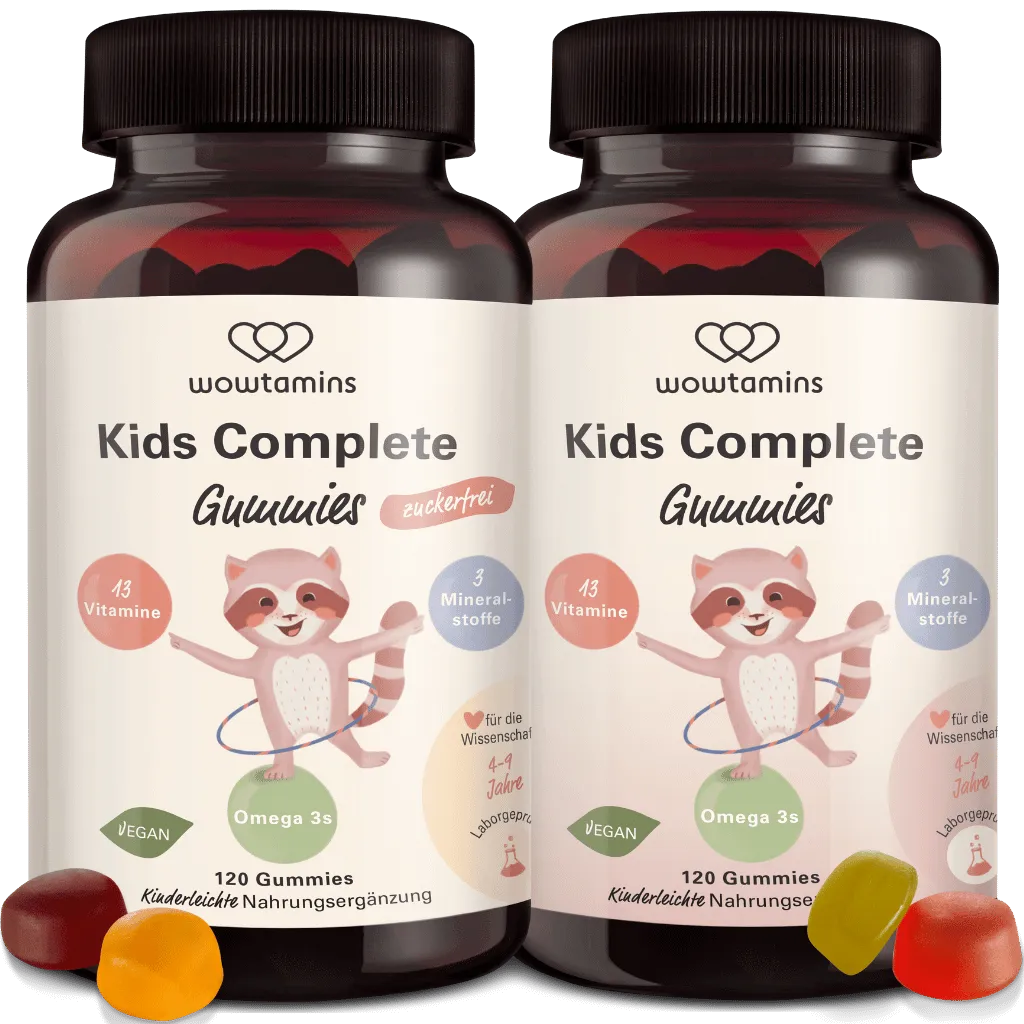
For larger amounts of omega-3s, special fish oil and algae oil supplements such as our sugar-free Omega 3 Gummies are also a good option.

You can find more information about omega-3 fatty acids for children in our detailed article » Why omega-3 fatty acids are so important for children.

Pflichthinweis: Nahrungsergänzungsmittel sind kein Ersatz für eine ausgewogene und abwechslungsreiche Ernährung und eine gesunde Lebensweise.

Quellenverzeichnis - Omega-3 fatty acids – wowtamins nutrient guide
Entdecke unsere Vitamin-Gummies Kategorien