


Skip to content

Vitamin E - wowtamins Nutrient Guide

Vitamin E - wowtamins Nutrient Guide
What is the significance of vitamin E for children and adults?

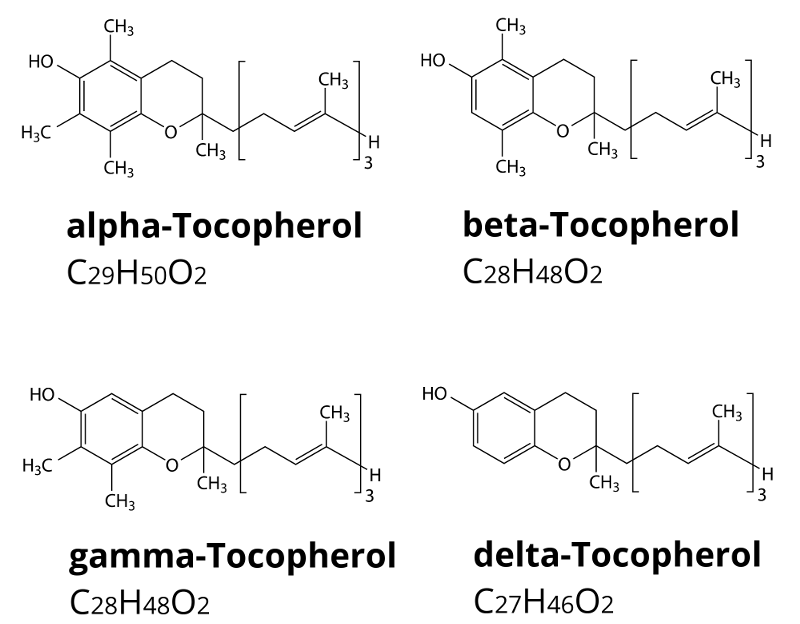
Scientists use the term vitamin E to refer to a group of essential nutrients. Eight of these compounds occur in various plant-based foods: Alpha-, beta-, gamma-, and delta-tocopherol, as well as alpha-, beta-, gamma-, and delta-tocotrienol.

All members of the vitamin E family are fat-soluble and have different biological activities. The most significant for humans is D-alpha-tocopherol. [1] To compare the levels of tocotrienols and tocopherols in food, biochemists introduced the term tocopherol equivalents (TE).

The following applies: 1 milligram (mg) TE corresponds to

  • 1 mg D-alpha-tocopherol
  • 2 mg beta-tocopherol
  • 4 mg gamma-tocopherol
  • 100 mg delta-tocopherol
  • 3.3 mg alpha-tocotrienol
  • 6.6 mg beta-tocotrienol
  • 13.2 mg gamma-tocotrienol

In other words: D-alpha-tocopherol has by far the highest bioavailability and can therefore be processed and absorbed by the body most effectively.

Vitamin E helps protect cells from oxidative stress.

How much vitamin E do children need?

In Germany, the DGE (German Nutrition Society) publishes guidelines for a healthy lifestyle. Children and adults should consume at least the following amounts of vitamin E with their meals every day:

Infants

  • 0 to under 4 months: 3 mg
  • 4 to under 12 months: 4 mg

Children

  • 1 to under 4 years: 5 mg (female), 6 mg (male)
  • 4 to under 7 years: 8 mg
  • 7 to under 10 years: 9 mg (female), 10 mg (male)
  • 10 to under 13 years: 11 mg (female), 13 mg (male)
  • 13 to under 15 years: 12 mg (female), 14 mg (male)

Adolescents and adults

  • 15 to under 19 years: 12 mg (female), 15 mg (male)

Men: 12 to 15 mg

Women: 11 to 12 mg

Pregnant women: 13 mg

Breastfeeding women: 17 mg

Minimum daily amount of vitamin E, as of 03/2024. [2]

Current studies on dietary habits (VELS- and EsKiMo-study) show that inadequate vitamin E intake is widespread among children. In the 1- to 4-year-old age group, the average (median) intake of girls and boys does not reach the officially recommended daily amounts. The same applies to children between 6 and 11 years of age. [3, 4]

In other words: More than half of our children between 1 and 11 years of age consume too little vitamin E. Because the body stores large amounts of this vital nutrient in the liver and fatty tissue, inadequate intake often becomes noticeable only after a longer period of time.

Where is vitamin E found?

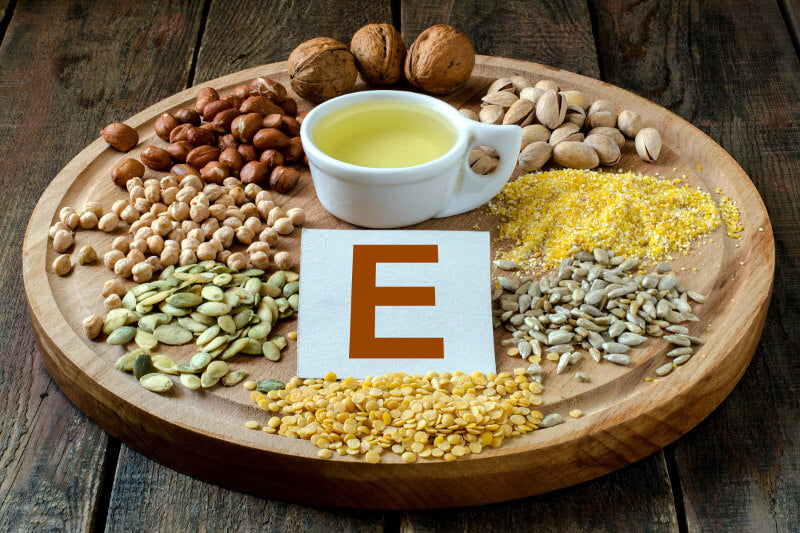
Vitamin E is found mainly in oils, fats, and nuts. We cannot produce this essential nutrient ourselves, so we need to regularly obtain it from food.

Fats & oils (tocopherol equivalents per 100 grams)

  • Wheat germ oil – 174 mg
  • Sunflower oil – 63 mg
  • Corn germ oil – 34 mg
  • Soybean oil – 17 mg
  • Margarine – 16 mg
  • Olive oil – 12 mg

Nuts & grains (tocopherol equivalents per 100 grams)

  • Multigrain muesli – 79.2 mg
  • Sunflower seeds – 34.5 mg
  • Almonds – 26 mg
  • Hazelnuts – 15 mg
  • Pine nuts – 9 mg
  • Brazil nuts – 7.6 mg
  • Walnuts – 6 mg

Tocopherol equivalents in various foods. [5, 6, 7]

For children aged 4 to 7, half a tablespoon of wheat germ oil or a handful of walnuts, hazelnuts, and almonds is enough to meet the daily requirement of 8 milligrams of vitamin E.

Vitamin E is of course also found in our products, such as the Kids Complete Gummies.

Mandatory notice: Food supplements are not a substitute for a balanced and varied diet and a healthy lifestyle.

List of sources - Vitamin E - wowtamins Nutrient Guide
Discover our vitamin gummy categories